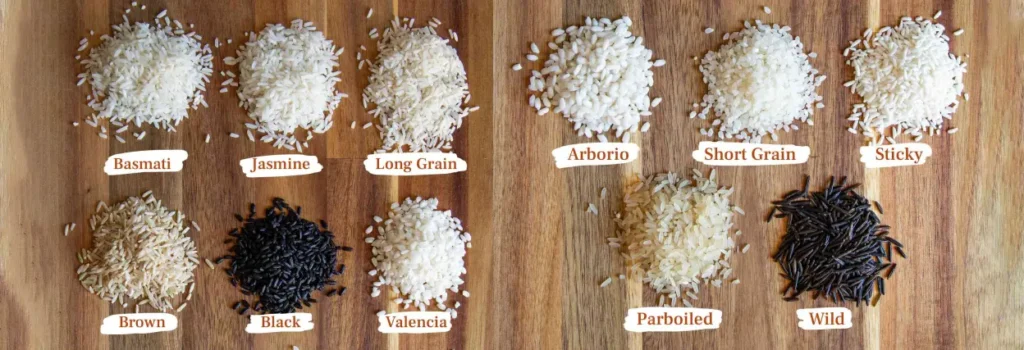
Rice is not just one grain—it’s a family of thousands of varieties grown in every corner of the world. Each type has its own taste, texture, aroma, and story. From fragrant basmati in India to sticky rice in Thailand, rice reflects culture, geography, and tradition.
Here are the Top 10 types of rice you should know about, and why they matter both in the kitchen and in our lives.
1. Basmati Rice (India & Pakistan)
Long, slender grains with a natural fragrance. Known as the “King of Rice,” basmati is famous for its soft texture and aromatic flavour. Perfect for biryani, pilaf, and festive dishes.
2. Jasmine Rice (Thailand)
Soft, slightly sticky, and floral in aroma, jasmine rice pairs beautifully with Thai curries and stir-fries. Its delicate fragrance makes every meal feel special.
3. Arborio Rice (Italy)
A short-grain Italian rice used for creamy risottos. Arbor absorbs flavours while releasing starch, giving risotto its signature velvety texture.
4. Sushi Rice (Japan)
Short-grain rice that is sticky enough to hold its shape. Seasoned with rice vinegar, sugar, and salt, it forms the foundation of sushi, one of Japan’s most iconic culinary traditions.
5. Glutinous (Sticky) Rice (Southeast Asia)
Despite its name, sticky rice does not contain gluten. Its chewy texture makes it perfect for dumplings, rice cakes, and desserts. Popular in Laos, Thailand, and parts of China.
6. Black Rice (China & Southeast Asia)
Also called “forbidden rice,” black rice is rich in antioxidants and turns deep purple when cooked. With a nutty flavor, it is often used in both savoury dishes and pleasant puddings.
7. Red Rice (Bhutan, Sri Lanka, Southern India)
Naturally red because of its anthocyanin content, red rice has a nutty taste and chewy texture. It is packed with nutrients and loved for its earthy flavour.
8. Brown Rice (Worldwide)
Unmilled rice that retains its bran layer, making it higher in fibre, vitamins, and minerals. It takes longer to cook than white rice but offers a wholesome, nutty flavour.
9. Parboiled rice (Africa & South Asia)
Rice that has been partially boiled in its husk. This process locks in nutrients and makes the grains firmer and less sticky. Popular in African cuisines and South Asian households.
10. Wild rice (North America)
Not technically rice but a grass seed, wild rice has a smoky, nutty flavor and chewy texture. It is often mixed with white rice or used in salads and soups.